
Hurricane Season Roof Checklist for Jacksonville Homeowners
By Shaka Roofing · Published
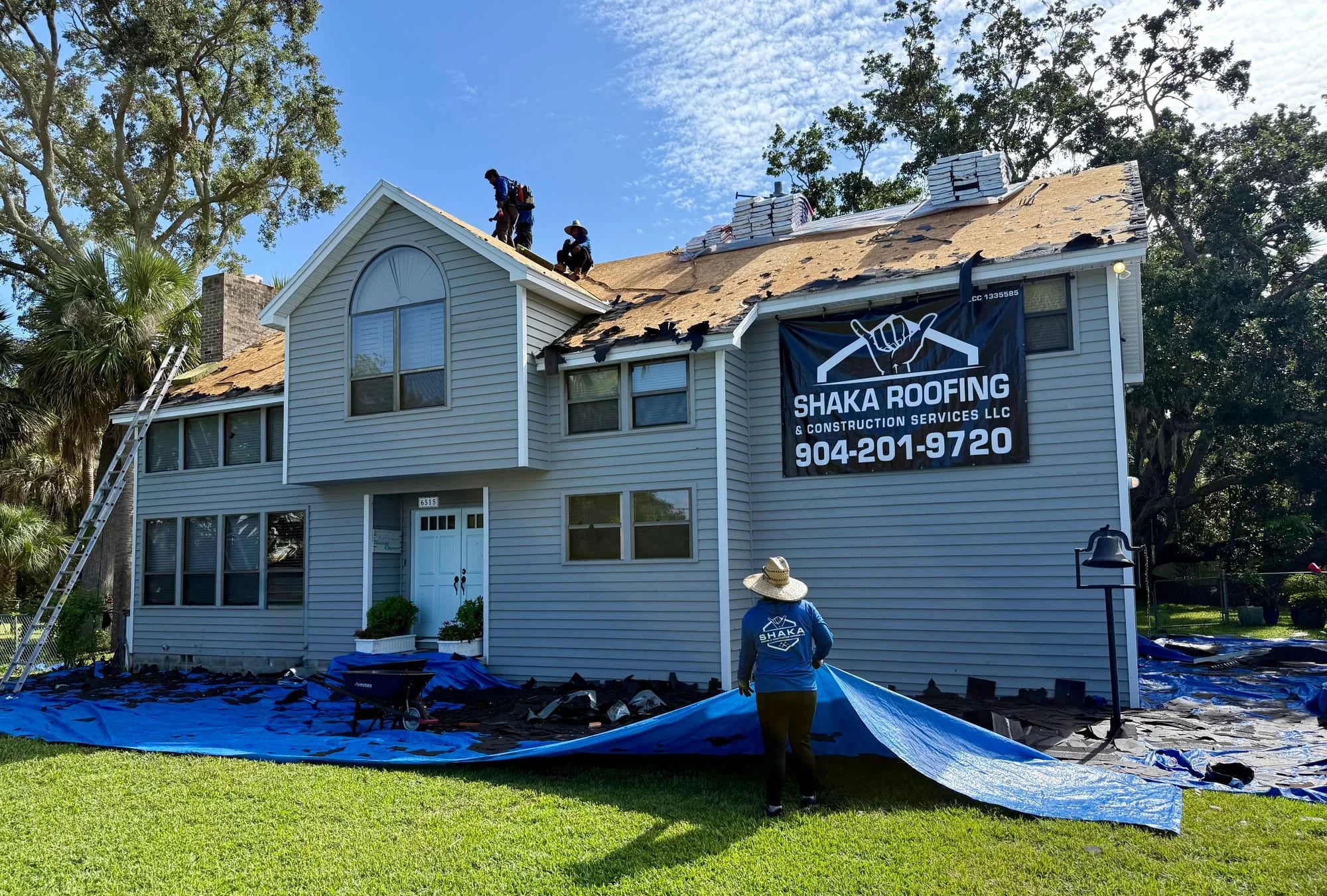
Atlantic hurricane season runs from June 1 to November 30, and in Jacksonville the roof is the part of the house that takes the first hit. Most storm damage we repair didn't start with the storm; it started with a small problem that the wind found. This checklist is what we'd do on our own homes before the season, during a watch, and after a storm passes.
Before the season (May–June)
1. Get the roof inspected
Walk around the house and look up, but understand that the problems that matter most are hard to see from the ground: creased shingles, lifted tabs that have lost their seal, nail pops, cracked pipe boots and flashing that has pulled away. A free roof inspection takes care of this, and you get a written report with photos. Roofs over about 15 years old should be checked every year regardless.
2. Re-seal or replace loose shingles
Shingles are glued down by a heat-activated strip along the bottom edge. Where that seal has failed, wind gets under the tab and peels it, and one peeled shingle becomes a strip of them. Loose or lifted shingles can be hand-sealed or replaced before the season; after a storm the same spot becomes a leak and a tarp.
3. Check flashing and penetrations
Flashing at walls, chimneys, valleys and skylights, plus rubber pipe boots, are where most leaks begin. Cracked sealant and rusted or separated flashing are easy to fix in dry weather and miserable to deal with in a storm.
4. Clear gutters and downspouts
Clogged gutters hold water against the fascia and the edge of the roof deck, and in heavy rain they overflow behind the drip edge. Clean them, make sure downspouts carry water away from the foundation, and check that the gutters are still firmly attached.
5. Trim trees back from the roof
Branches that touch the roof scuff shingles every time the wind blows and become battering rams in a storm. Have anything overhanging the roof cut back, and have dead limbs removed from trees near the house.
6. Look in the attic
On a bright day, look for daylight at the roof deck, water stains on the underside of the plywood, rusted nail tips or damp insulation. Those are signs of an existing leak that a storm will make worse.
7. Know what you have
Find your roof's installation date and the permit, if you have them. It matters for two reasons: roofs installed under the 2007 Florida Building Code or later have more repair options under the state's 25% rule (we explain it in Repair or replace? Florida's 25% rule), and you'll want the information handy if you ever need to document the roof's condition.
Does roof type matter in a hurricane?
Both shingle and metal roofs can be built to handle Northeast Florida wind when they are installed correctly, and the installation matters more than the material. On a shingle roof, the things that fail first are the pieces that were never sealed or nailed properly: a wind-lifted tab that tears, a ridge cap that was short-nailed, drip edge that lets wind get under the first course. On a metal roof, standing seam panels with concealed clips hold up well, while older exposed-fastener panels fail at backed-out screws. If you are replacing a roof before the season, ask how the edges, ridge and fasteners are detailed for wind, not just which product is going on. Our metal roofing and shingle roofing pages cover how we build each one.
When a storm is in the forecast
- Bring in or tie down anything in the yard that can fly: furniture, grills, trampolines, potted plants.
- Don't climb on the roof. If you know a shingle is loose, call us; a last-minute hand seal is a roofer's job, not a ladder-in-the-wind job.
- Photograph your roof and the ceilings inside from the ground and from the rooms. A "before" photo set is useful for your own records.
- Save our number: (904) 201-9720. We answer 24/7 for roofing emergencies.
After the storm
Stay off the roof
Wet shingles, hidden damage and downed lines make roofs dangerous after a storm. Look from the ground and from inside; leave the walking to us.
Look for these signs
- Missing, flipped-back or creased shingles.
- Shingle pieces or a pile of granules at the downspouts.
- Dented or displaced vents, flashing or gutters.
- New stains on ceilings or around light fixtures, or drips in the attic.
Stop the water, then call
If water is coming in, move belongings, catch the drip, and call us. If a permanent repair can't be made right away, we tarp the damaged area to keep your home dry until it can. Our emergency and storm damage service handles the assessment, the temporary protection and the permanent repair.
Get it documented
Even if you don't see damage, a post-storm inspection is free and gives you a written photo report of the roof's condition after the event. Creased and bruised shingles are hard to spot and shorten the life of the roof even when nothing leaks yet.
A note on storm-chasing roofers
After every major storm, out-of-town crews knock on doors across Duval, St. Johns, Clay and Nassau counties. Before anyone touches your roof, verify the contractor's Florida license on the DBPR website (ours is CCC1335585), get the estimate in writing, and be careful with anyone who pressures you to sign on the spot. A local company will still be here next year to honor its warranty.
Print this, stick it on the fridge
- Inspection booked ✔
- Loose shingles sealed ✔
- Flashing and pipe boots checked ✔
- Gutters cleared ✔
- Trees trimmed ✔
- Attic checked ✔
- Roof age and permit found ✔
- (904) 201-9720 saved ✔
Want us to handle the first item on the list? Call or text and we'll schedule your free pre-season inspection. 🤙🏼
Need a hand with your roof?
Free inspection, written estimate, no pressure. Call or text (904) 201-9720 or request an estimate online.