
Repair or Replace Your Roof? Florida’s 25% Rule, Explained
By Shaka Roofing · Published
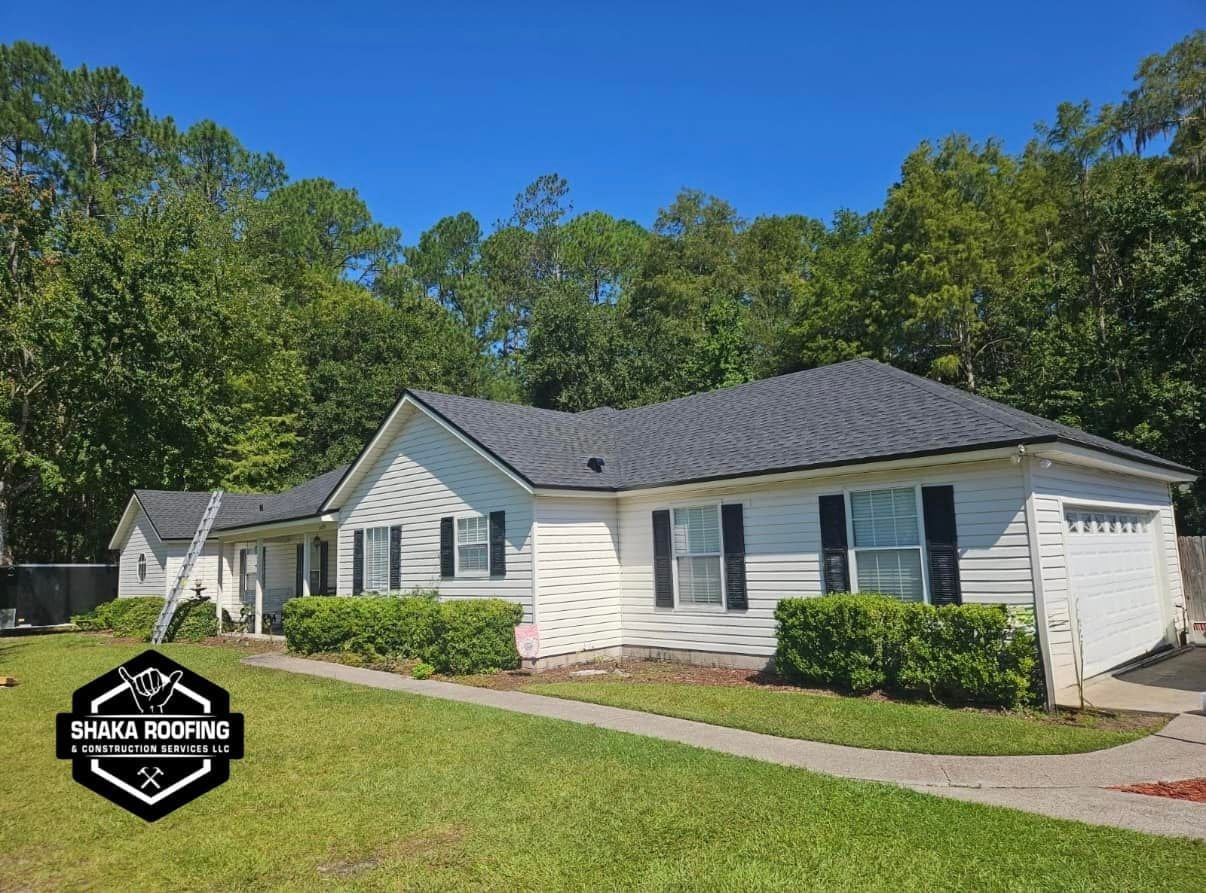
"Can you just fix it?" is the most common question we get on a roof inspection in Jacksonville, and the honest answer is usually yes, sometimes no, and occasionally "the state says no." Florida has a rule, often called the 25% rule, that decides when a repair has to become a replacement. It also changed in 2022 in a way that works in many homeowners' favor. Here's what the rule actually says, when a repair genuinely makes sense, and the signs that it doesn't.
The 25% rule, in plain English
Florida Statute 553.844 covers windstorm loss mitigation for roofs. For years the practical effect of the Florida Building Code was simple: if you repaired, replaced or recovered 25 percent or more of a roof section within a 12-month period, the whole section had to be brought up to the current code. For an older roof, that usually meant a full replacement, because you can't make half a roof meet today's requirements.
What changed in 2022
In 2022 the Legislature amended the statute (chapter 2022-269, the bill known as SB 4-D). Subsection (5) now says that if an existing roofing system or roof section was built, repaired or replaced in compliance with the 2007 Florida Building Code or any later edition, and 25 percent or more of it is being repaired, replaced or recovered, only the repaired, replaced or recovered portion has to meet the current code. The Florida Building Commission was directed to adopt that exception into the Building Code, and local governments cannot amend it by ordinance.
In practice:
- Roof installed under the 2007 code or later (most roofs put on after about 2008–2009): a large repair can stay a repair. You fix the damaged area to current code and keep the rest.
- Roof installed under an older code: the 25% threshold still applies, so a repair that touches a quarter or more of a roof section generally triggers replacement of that section.
The permit records for your home show which code your roof was built under. We check this as part of the inspection, because it changes the advice we give you.
When a repair is the right call
A repair makes sense when the damage is local and the rest of the roof has life left:
- A few missing, cracked or wind-lifted shingles after a storm.
- A leak at a penetration: pipe boot, vent, skylight, satellite mount or a chimney with failed flashing. These are the most common leaks we see and are rarely a sign the roof is done.
- Flashing at a wall or valley that was installed poorly or has separated.
- A small flat-roof section on a porch or addition with a seam or ponding problem.
In most cases, leaking roofs do not need to be replaced unless they are really old. Missing, cracked or broken shingles can be repaired and replaced to stop a leak.
When replacement is the right call
- The roof is near the end of its expected life: around 20 years for many Jacksonville shingle roofs, sooner on sun-baked slopes.
- Multiple leaks or leaks that keep coming back in different places.
- Widespread granule loss, shingles that are brittle, curling or cracking across whole slopes, or a roof that has already been repaired many times.
- Storm damage across a large area, where patching would mean replacing a quarter or more of an older roof anyway.
- Rotted decking showing up in more than one spot, which means water has been getting in for a while.
Roofs with multiple leaks or widespread issues should be replaced. A new roof also resets the clock on your maintenance, and a new GAF shingle roof installed by Shaka Roofing qualifies for the GAF Silver Pledge™ limited warranty (terms on GAF's site).
What about the cost difference?
A repair is almost always cheaper than a replacement on the day you pay for it. The question is what you are buying. A repair on a roof with ten good years left buys those years for a small amount of money, and that is a great deal. A repair on a roof that is already curling and shedding granules buys a season or two, and you will pay for the replacement anyway, plus the repair, plus whatever the next leak damages inside. That is why we put both prices on the same page when both are real options: the repair cost, the replacement cost, and our honest read on how long the repair will hold. We also offer financing through Hearth so a replacement that makes sense does not have to wait for the next leak to force the decision.
Roof age and your insurance (informational)
Many Florida insurers look closely at the age and condition of a shingle roof at renewal, and a roof around 15 years old or older often gets extra attention. A written inspection report with photos documents the condition of your roof. This article is general information, not insurance advice; your policy and your carrier decide what applies to you.
How we decide, step by step
- Free inspection: we walk the roof, check the attic side where we can, and photograph everything.
- Written report: what we found, how old the roof is, which code it was likely built under, and whether a repair would cross the 25% threshold for an older roof.
- Both options when both exist: the repair price and the replacement price, with the trade-offs explained. You decide.
- The work: repairs are usually done in a visit; most residential shingle replacements take 1–2 days.
The short version
- Local damage on a roof with life left → repair it.
- Old roof, widespread wear, repeated leaks → replace it.
- Big repair on a roof built to the 2007 code or later → the 2022 change usually lets it stay a repair.
- Big repair on an older roof → the 25% rule usually means the section gets replaced.
Not sure which one you have? That's what the free inspection is for. Call or text (904) 201-9720 and we'll tell you straight. 🤙🏼
Need a hand with your roof?
Free inspection, written estimate, no pressure. Call or text (904) 201-9720 or request an estimate online.