
Shingle, Metal, Tile or Flat: Choosing a Roof in Florida
By Shaka Roofing · Published
Ask three neighbors what the best roof is and you'll get three answers, usually the one they already have. The honest answer for Northeast Florida is that shingle, metal, tile and flat roofing each do a specific job well, and the right pick depends on your house, your budget and how long you plan to stay. We install all four across Duval, St. Johns, Clay and Nassau counties, so we have no reason to push one over another.
What Florida asks of a roof
Jacksonville gets long, hot summers with hard afternoon sun, heavy humidity, tropical storms and the occasional hurricane during the June-to-November season, and, from the Beaches to Fernandina, salt in the air year round. Any roof we put on has to be installed to the current Florida Building Code, which spells out fastening, underlayment and product approvals for our wind zone. A roof that meets that standard is the baseline; the material decides how it looks, how it ages and what it costs over its life.
The four options side by side
Ratings are relative to each other for Northeast Florida homes, not laboratory numbers: lifespans and prices vary too much by product and install to quote responsibly on a web page.
Architectural shingles
$- Wind
- Strong as a system:
- Heat
- Good with ventilation:
- Salt air
- Fine:
- Upkeep
- Low:
- Service life
- Shortest of the four:
- Repairability
- Easiest:
Best for: most homes, best value per year, owners who may sell within ten years.
Architectural shingles in Jacksonville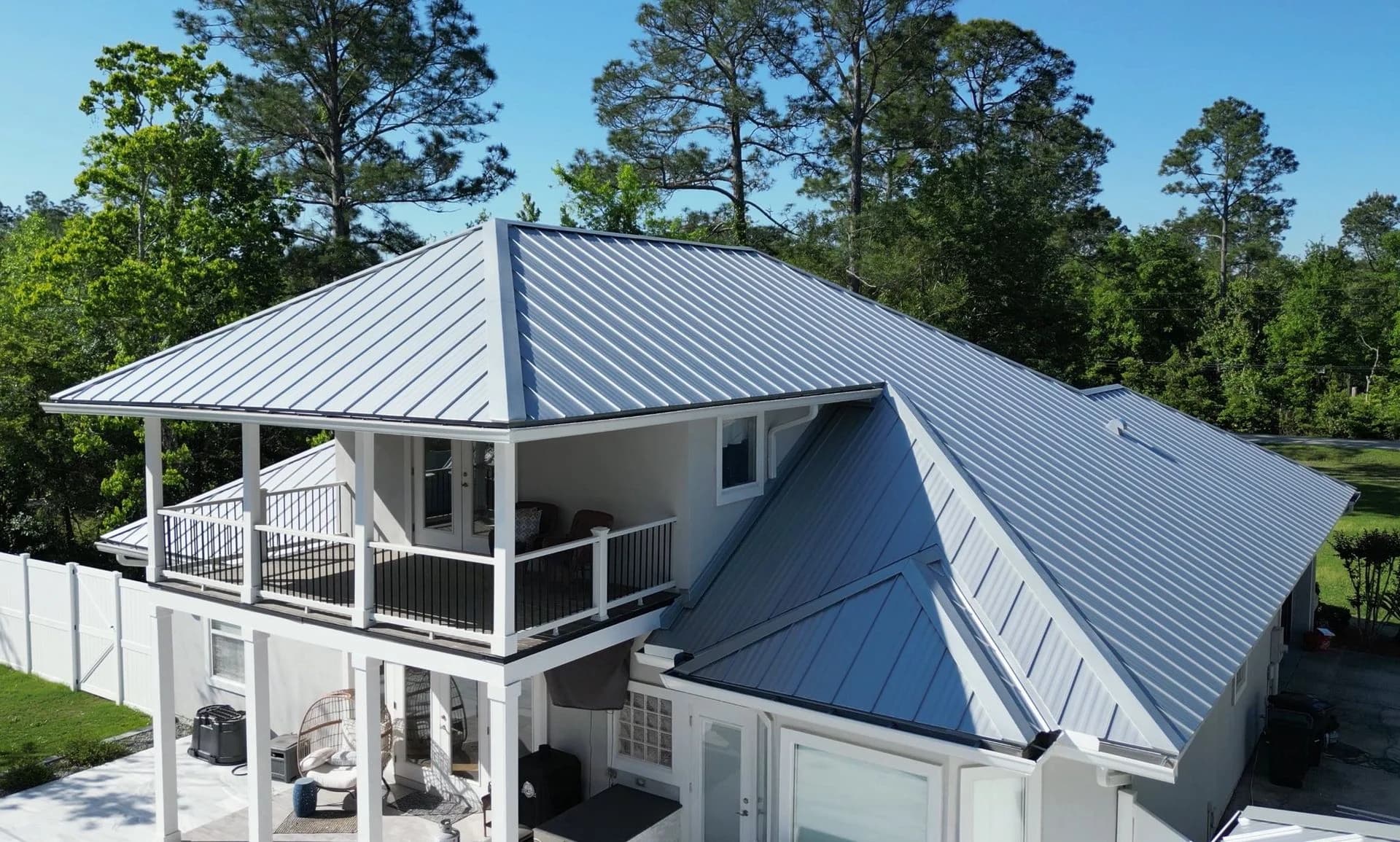
Standing seam metal
$$$- Wind
- Excellent:
- Heat
- Best (reflective):
- Salt air
- Fine with aluminum:
- Upkeep
- Very low:
- Service life
- Longest:
- Repairability
- Panel level:
Best for: coastal homes, long-term owners, anyone who wants to replace the roof once.
Standing seam metal in Jacksonville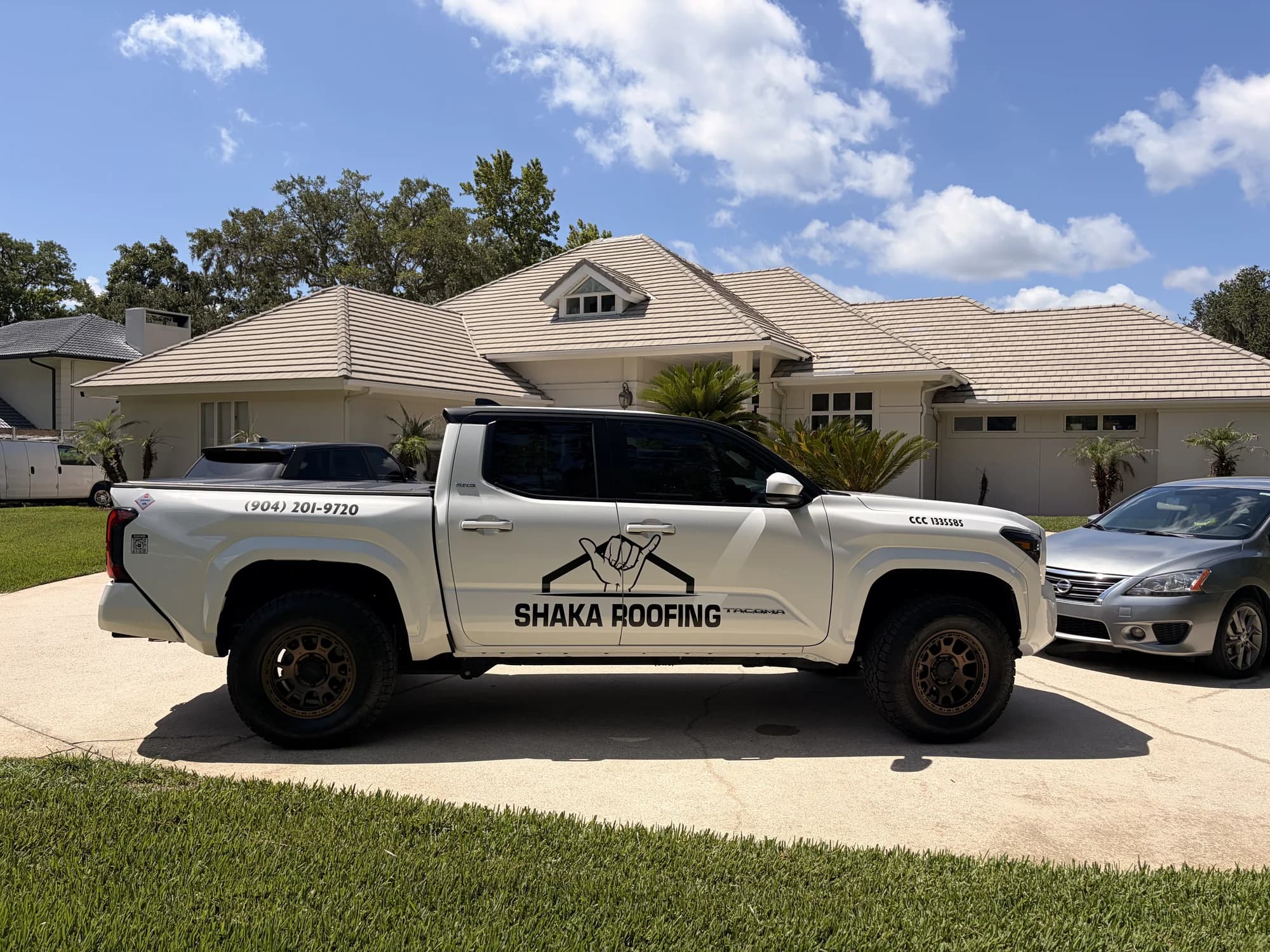
Concrete or clay tile
$$$- Wind
- Strong when attached to code:
- Heat
- Very good (mass + air gap):
- Salt air
- Fine:
- Upkeep
- Medium (walk-on damage):
- Service life
- Long tile, shorter underlayment:
- Repairability
- Tile level:
Best for: homes designed for tile, HOA communities where tile is the standard.
Concrete or clay tile in Jacksonville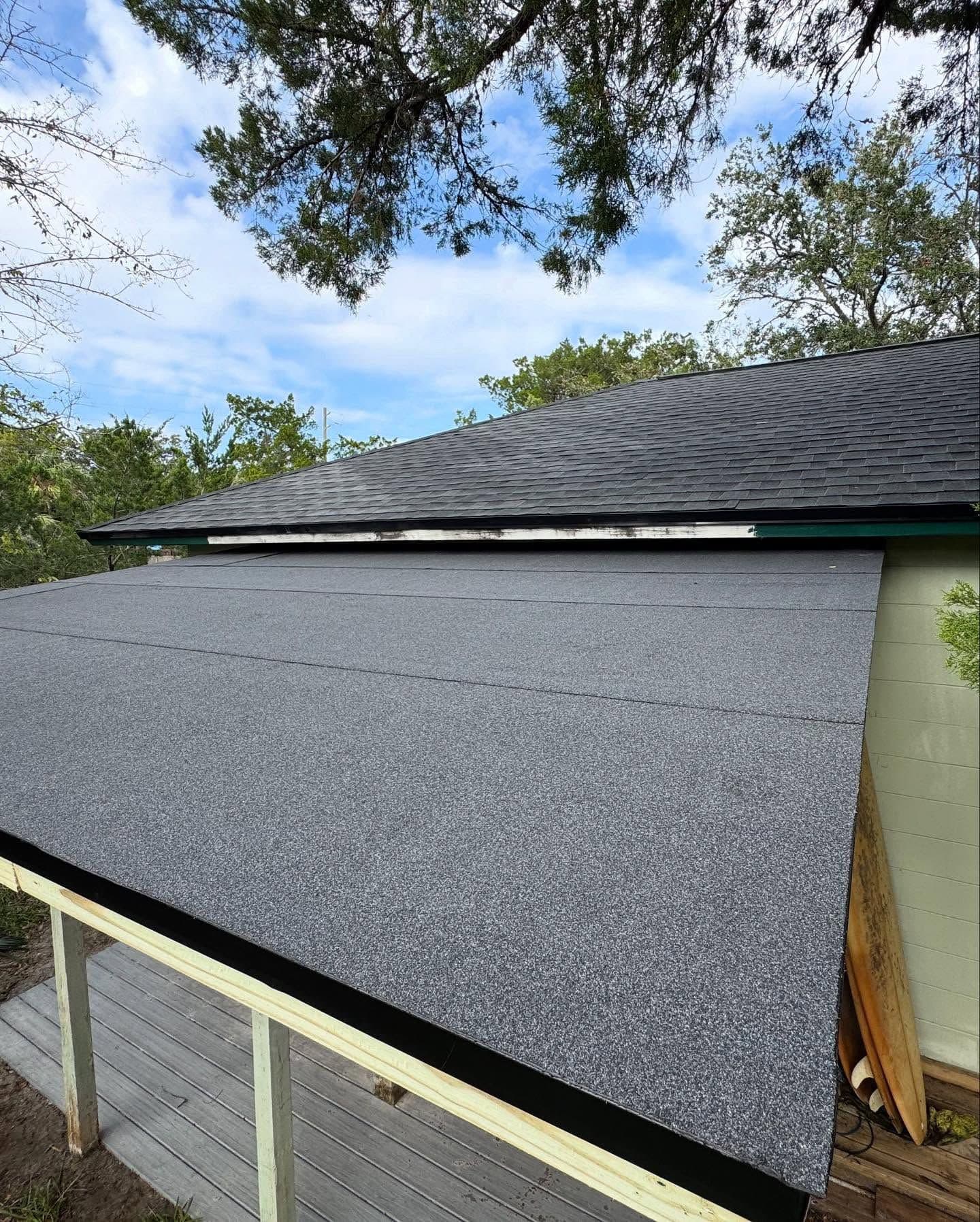
Flat / low-slope
$ to $$- Wind
- Edges and seams decide it:
- Heat
- Good with white membranes:
- Salt air
- Fine:
- Upkeep
- Highest (drains, seams):
- Service life
- Maintenance-driven:
- Repairability
- Patch and seam work:
Best for: porches, additions, lanais, garages and commercial buildings.
Flat / low-slope in Jacksonville
Architectural asphalt shingles
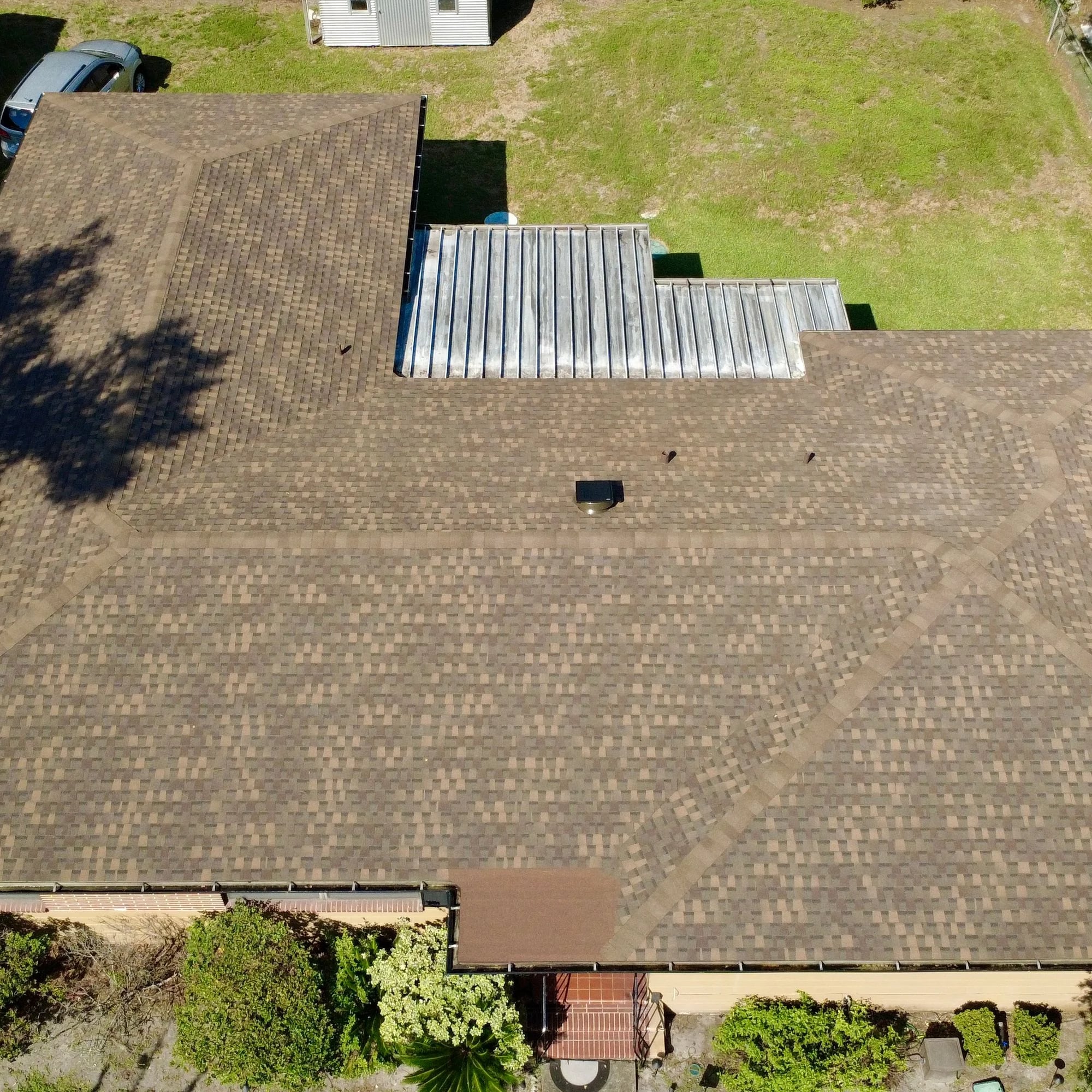
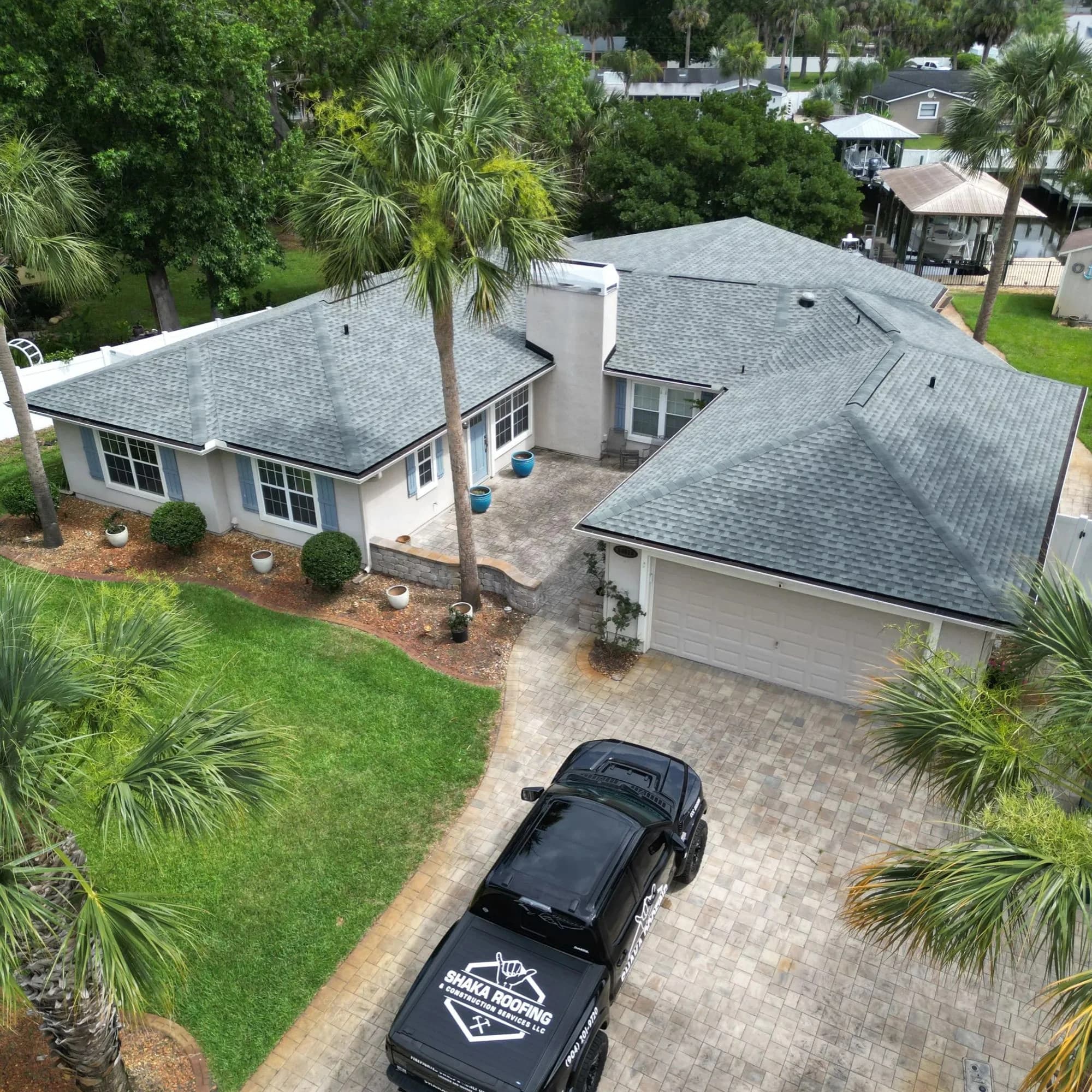
Shingles are the roof on most Jacksonville homes, and for good reason. Modern architectural (dimensional) shingles are thicker and more wind-resistant than the flat three-tab shingles of the 1990s, they come in a wide range of colors, and they are the most affordable way to put a complete, code-compliant roof on a house.
- Wind: The GAF shingles we install carry a Florida Product Approval and are installed to GAF's high-wind nailing pattern. With LayerLock™ shingles and the required GAF accessories installed as a system, GAF's WindProven™ limited wind warranty has no maximum wind speed limitation.
- Heat: Lighter colors run cooler. Proper attic ventilation matters more than the shingle color for keeping the attic, and your power bill, in check.
- Salt air: Shingles don't corrode. Metal flashings and fasteners still need the right coatings, which is an install detail, not a material choice.
- Upkeep: Keep gutters clear, trim trees back, and have the roof looked at after big storms. StainGuard Plus™ shingles are built to resist the algae streaks that are the usual cosmetic complaint.
- Warranty: Our 10-year workmanship warranty on every installation; GAF shingle roofs can also be registered for the GAF Silver Pledge™ limited warranty. Details on our shingle roofing page.
Standing seam metal
Metal has gone from "farmhouse" to one of the most requested roofs at the Beaches and on new coastal builds. Standing seam panels run from ridge to eave with raised, interlocking seams and concealed fasteners, so there are no exposed screws to back out and leak.
- Wind: Excellent when installed on a sound deck with the right clip spacing. Panels are continuous, so there are no individual pieces to lift.
- Heat: Metal reflects more sun than shingles and sheds heat quickly after sunset. Light and "cool roof" finishes make the biggest difference.
- Salt air: Galvalume-coated steel is the standard inland, but most steel finish warranties exclude homes close to salt water, so at the Beaches and Ponte Vedra we spec aluminum panels.
- Upkeep: Keep debris out of the valleys and check sealants at penetrations every few years.
- Noise and look: With solid decking and underlayment under the panels, rain is not the drumroll people imagine. Standing seam reads clean and modern; exposed-fastener panels read rural.
Concrete and clay tile
Tile gives Mediterranean, Spanish and coastal-style homes the look they were designed for, and in Florida it has a long track record. The tile itself is only half the roof: the underlayment beneath it is what keeps water out, and it is the part that wears out first.
- Wind: Tile must be attached to code for our wind zone, mechanically fastened and/or foam-adhered. Individual tiles can crack or slip in a storm; that is a repair, not a replacement.
- Heat: Tile's mass and the air gap beneath it keep heat off the deck better than most materials.
- Weight: Tile is heavy. Putting tile on a house framed for shingles needs a structural review by an engineer first; we arrange that before quoting.
- Upkeep: Keep pressure washers and casual foot traffic off it. Expect an underlayment re-roof at some point even when the tiles themselves are fine. See tile roof repair and replacement.
Flat and low-slope roofing
Flat roofs are rarely the whole house in Jacksonville; they are the porch, the addition, the lanai, the garage or the commercial building. Water doesn't run off a low-slope roof the way it does off a pitched one, so these roofs use membranes and built-up systems instead of shingles.
- Options: Modified bitumen, TPO and other single-ply membranes, and built-up roofing on commercial buildings. Each has a Florida Product Approval and specific install requirements.
- Wind and water: Edge metal and drainage are everything. Most flat-roof leaks start at a seam, a drain or an edge, not in the middle of the field.
- Heat: White TPO and reflective coatings keep a flat roof noticeably cooler than a dark membrane.
- Upkeep: The highest of the four. Drains clear, seams and penetrations checked, ideally every year. See flat roofing and commercial roofing.
HOA and neighborhood rules
Many Jacksonville-area communities, especially in St. Johns County and at the Beaches, have architectural review rules that limit roof colors, materials and even panel profiles. Some require tile or a specific shingle color family; some prohibit exposed-fastener metal; most require an application before work starts. Check your HOA documents before you fall in love with a sample, and bring the paperwork to your estimate. We help with HOA applications and, in Riverside, Avondale, Springfield and Ortega, with historic-district paperwork.
How to decide
Five questions that settle it
- How long will you own the house? Under ten years favors shingles; "forever" makes metal easier to justify.
- Where is it? East of the Intracoastal, think aluminum metal or coated fasteners regardless of material.
- What was it built for? Tile on a shingle-framed house needs an engineer's sign-off; a low-slope porch needs a membrane, not shingles.
- What does the HOA allow? Read the rules first.
- What does the budget allow today? A good shingle roof installed to code beats a cheap metal roof installed badly every time. Financing through Hearth is available for the bigger options.
Whichever way you lean, the next step is the same: a free inspection and a written estimate that spells out the materials, the underlayment, the flashing and the warranty. Call or text (904) 201-9720 and we'll walk the roof with you.
Need a hand with your roof?
Free inspection, written estimate, no pressure. Call or text (904) 201-9720 or request an estimate online.